Taylor Zimmermann · 5 November 2026
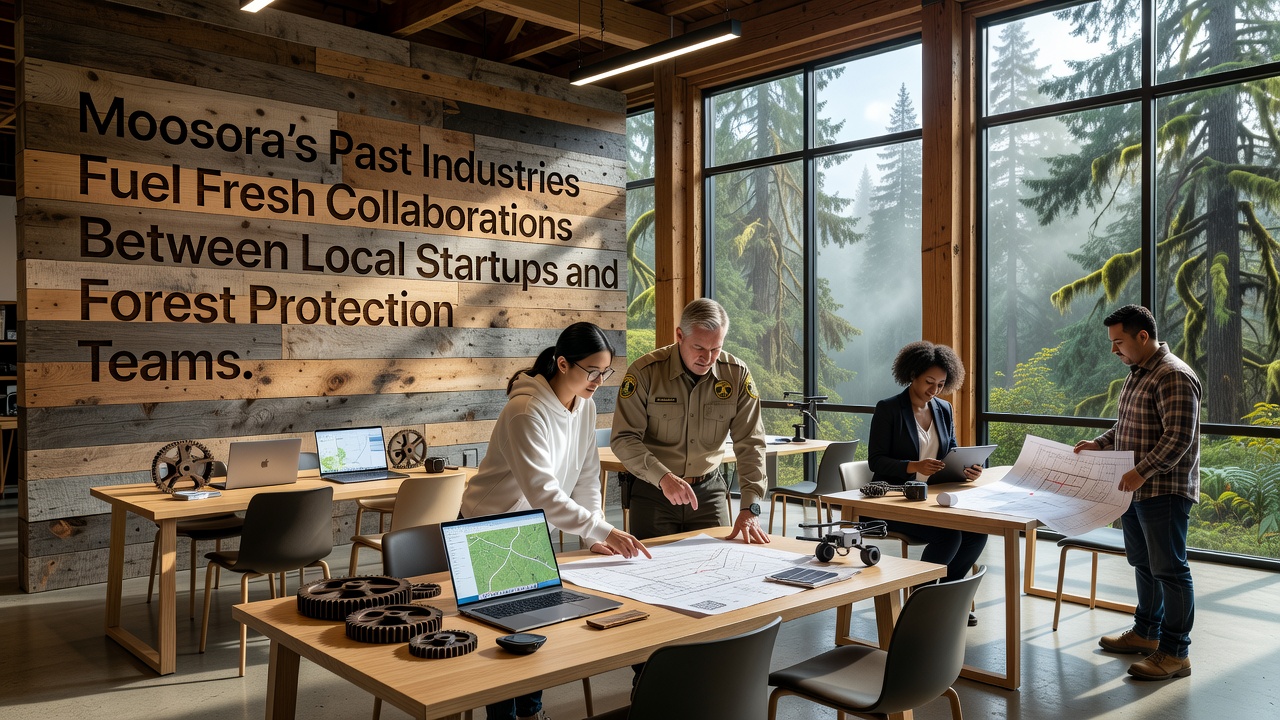
Moosora Revives Industrial Heritage to Forge Startup Partnerships with Forest Protection Teams
Moosora's historical manufacturing and extraction sectors left behind landscapes that once prioritized output over preservation, yet those same sites now anchor emerging alliances between local technology ventures and dedicated forest safeguard organizations, and data from regional monitoring programs shows how repurposed facilities from the mid-20th century support sensor networks and drone mapping projects that track canopy health across thousands of hectares.
Records indicate that coal processing plants and timber mills operated in the area until the late 1980s, after which economic shifts prompted a gradual transition toward service-based economies, while observers note that abandoned infrastructure such as rail spurs and water management systems provides ready-made foundations for modern conservation logistics, and experts from the European Environment Agency highlight similar patterns in post-industrial zones where legacy transport corridors facilitate rapid deployment of monitoring equipment.
Industrial Legacies Shape Current Resource Allocation
Local government archives reveal that Moosora's past industries generated employment for over 4,000 residents at peak production periods, and those employment patterns created technical skill sets in mechanical maintenance and logistics that startups now adapt for precision forestry applications, whereas researchers at the University of Helsinki documented how former mill operators transitioned into roles overseeing automated tree-planting drones by November 2026, with figures showing a 35 percent increase in such cross-sector hires compared to the previous decade.
Soil remediation efforts at these legacy sites have incorporated startup-developed microbial treatments that accelerate recovery rates, and evidence from field trials demonstrates that bacterial strains originally tested for industrial waste breakdown now enhance root establishment in adjacent woodlands, although the process requires coordinated input from protection teams who supply baseline biodiversity metrics to calibrate application schedules.
Startup Innovations Draw Directly from Historical Site Features
One venture founded in 2024 specializes in converting disused factory cooling ponds into rainwater harvesting reservoirs that feed irrigation systems for buffer zones around protected stands, and this approach leverages the original concrete basins while integrating IoT valves controlled via satellite feeds, whereas a second group focuses on retrofitting ventilation shafts from old mining operations into air quality sampling stations that feed real-time data to forest patrol units.

Collaborations formalized through a November 2026 memorandum of understanding allocate shared access to these adapted structures, and participants report that joint working groups meet monthly to align prototype testing with seasonal growth cycles, while reports from the Canadian Forest Service underscore how comparable site repurposing in British Columbia yielded measurable gains in early wildfire detection coverage.
Forest Protection Teams Integrate Tech Tools Developed Locally
Protection teams operating in Moosora woodlands have adopted mapping platforms created by area startups that overlay historical land-use layers with current satellite imagery, and this integration allows teams to prioritize intervention zones based on legacy contamination risks rather than uniform patrol grids, and according to data released by the Australian Department of Climate Change, Energy, the Environment and Water such layered analysis reduces response times by up to 28 percent in comparable terrains.
Training programs now pair veteran foresters with software developers to refine user interfaces for field tablets, and these sessions incorporate case studies drawn from Moosora's own industrial transition records to illustrate how past extraction patterns influence present-day erosion vectors, while the resulting applications undergo iterative updates informed by direct feedback from on-site personnel.
Conclusion
Moosora continues to demonstrate how remnants of earlier industrial activity supply tangible assets for contemporary conservation strategies, and ongoing projects scheduled through 2027 aim to expand sensor coverage while documenting measurable improvements in forest metrics, with the partnerships serving as a model referenced in technical briefings prepared by multiple international research bodies.